Pest control services in Houston protect residential and commercial structures from severe biological pressures driven by Gulf Coast heat and chronic humidity. TerraVance Bug Removal deploys targeted perimeter interventions and deep void treatments to eliminate infestations at their biological source rather than relying on surface sprays.
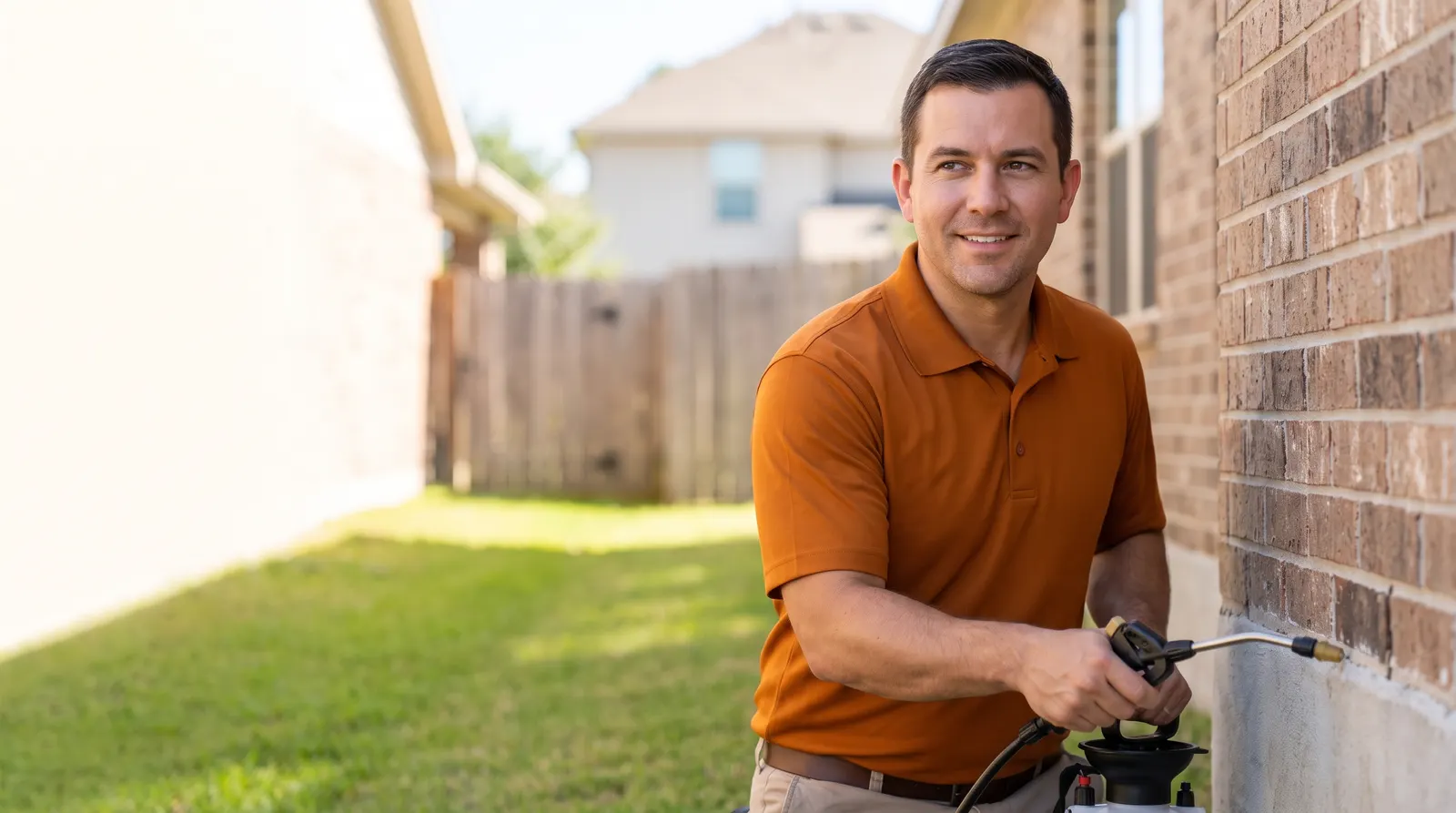
Pest control services in Houston encompass structural inspections, perimeter liquid barrier applications, and interior vector eradication designed to halt wood-destroying, disease-carrying, and food-contaminating organisms across coastal subtropical environments.
Every service reflects the same meticulous attention to detail, whether it's a single job or a larger pest control services project across Houston.
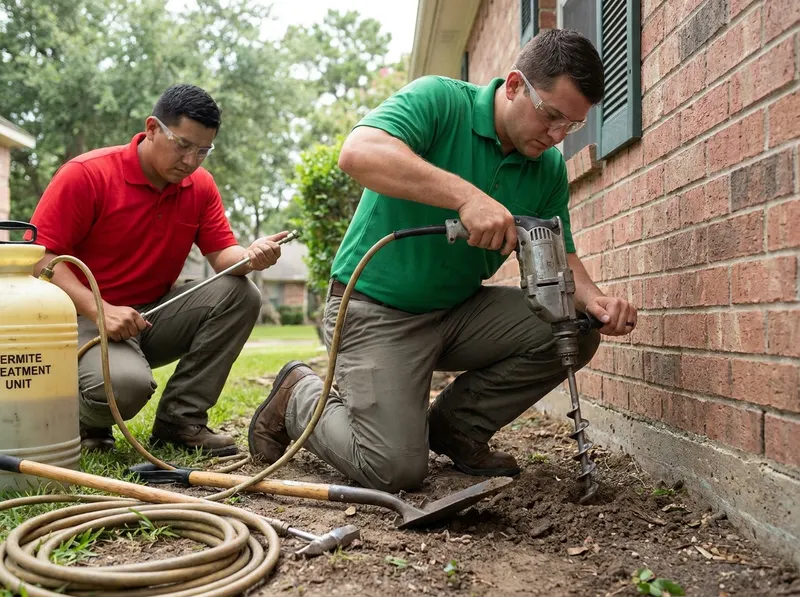
Soil trenching and non-repellent liquid termiticide applications utilizing fipronil halt eastern subterranean and Formosan colonies before foundation penetrations compromise structural framing timbers. Technicians excavate continuous perimeter trenches measuring 6 inches wide by 6 inches deep around exterior foundation perimeters, applying 4 gallons of finished termiticide emulsion per 10 linear feet into backfilled soil. Where monolithic concrete slabs, attached garages, stone patios, or driveway aprons abut structural perimeter walls, precision 0.5-inch vertical drilling through masonry at 12-inch horizontal spacing allows sub-slab pressure injection to establish a continuous sub-surface chemical barrier. According to structural pest guidelines published by the Texas A&M AgriLife Extension , non-repellent chemical chemistries permit subterranean worker termites to pass through treated zones undetected, transferring active ingredients directly to queens and juvenile castes via mutual grooming and social feeding behaviors known as trophallaxis.
Get a quote →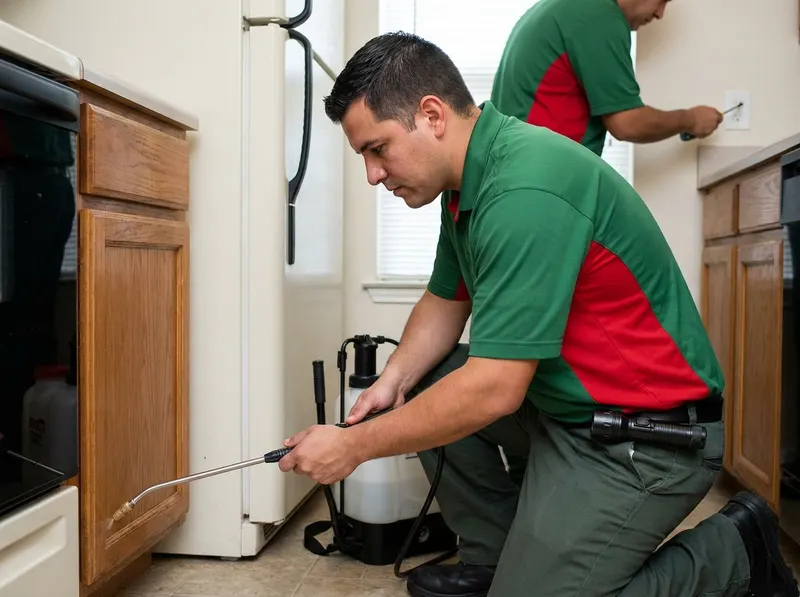
Precision crack-and-crevice gel formulations combined with insect growth regulators target juvenile development in high-humidity plumbing voids without widespread broadcast aerosol residue. Technicians inspect high-moisture focal points, including undersink drainage traps, refrigerator compressor housings, wall chases behind dishwashers, and hollow drawer glides using diagnostic flushing instruments. Direct placement of micro-doses of non-volatile hydramethylnon or indoxacarb baits targets adult and nymphal feeding behaviors, while pyriproxyfen insect growth regulators disrupt normal chitin deposition, rendering surviving juveniles sterile upon molting. Protocol adherence complies with structural pest rules enforced by the Texas Department of Agriculture , minimizing airborne pesticide drift while maintaining active bait availability across successive egg-case hatching intervals spaced 14 to 28 days apart.
Get a quote →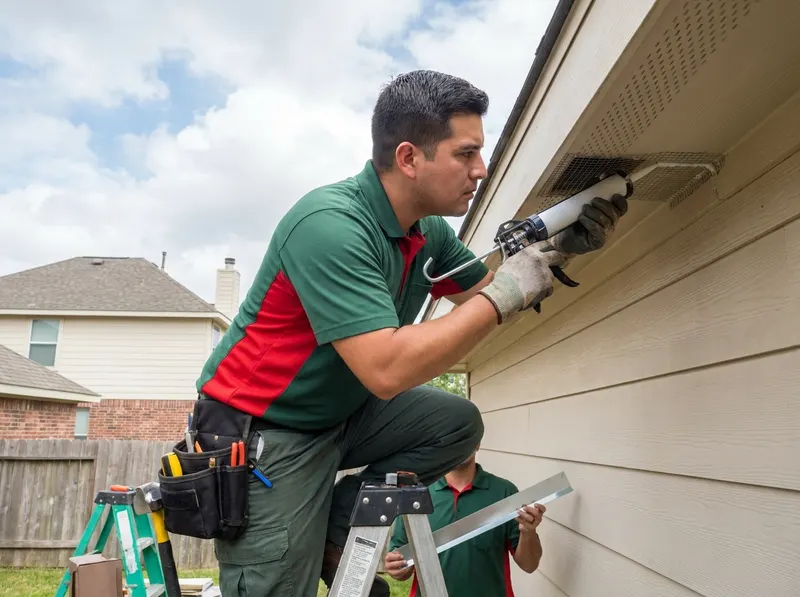
Mechanical structural defense seals attic vents, eaves, and weep holes with 18-gauge galvanized wire mesh, followed by targeted interior capture runs to remove trapped rodents. Houston roof rats exploit overhanging oak branches, electrical drop lines, and plumbing stacks to enter high-elevation roof vents, dormers, and facia gaps. Technicians physically survey the full building envelope from foundation footings to ridge caps, fastening corrosion-resistant 0.25-inch hardware cloth, custom-formed aluminum flashing, and expanding polyurethane foam fortified with copper wire mesh to close all openings exceeding one-quarter inch. Interior attic spaces undergo staged mechanical trap deployments along structural ceiling joists and wall runs until tracking powders confirm complete eradication, neutralizing fire hazards associated with chewed electrical wiring inside attic thermal insulation.
Get a quote →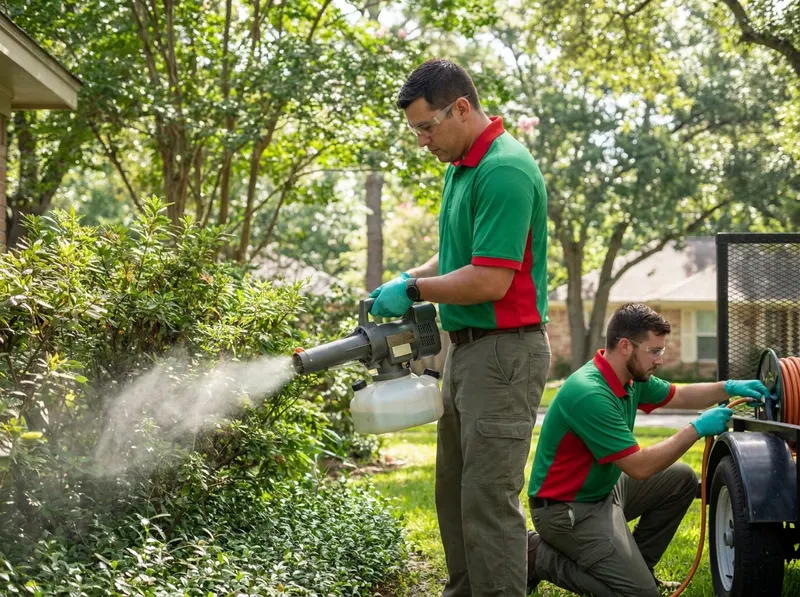
Residual microencapsulated barrier sprays and larvicide dunks applied to dense perimeter foliage neutralize adult vectors and prevent standing-water breeding across outdoor living spaces. Technicians deploy motorized backpack mist blowers that atomize microencapsulated bifenthrin solutions across the undersides of dense ornamental shrubbery, shaded perimeter fencing, and sheltered building eaves where adult mosquitoes rest during extreme daylight heat. Standing water collection basins, storm drains, and ornamental garden ponds receive slow-release biological controls containing Bacillus thuringiensis israelensis (BTI), a targeted soil bacterium identified by the Environmental Protection Agency that halts mosquito larvae development in aquatic stages without harming non-target organisms, aquatic life, or companion domestic animals.
Get a quote →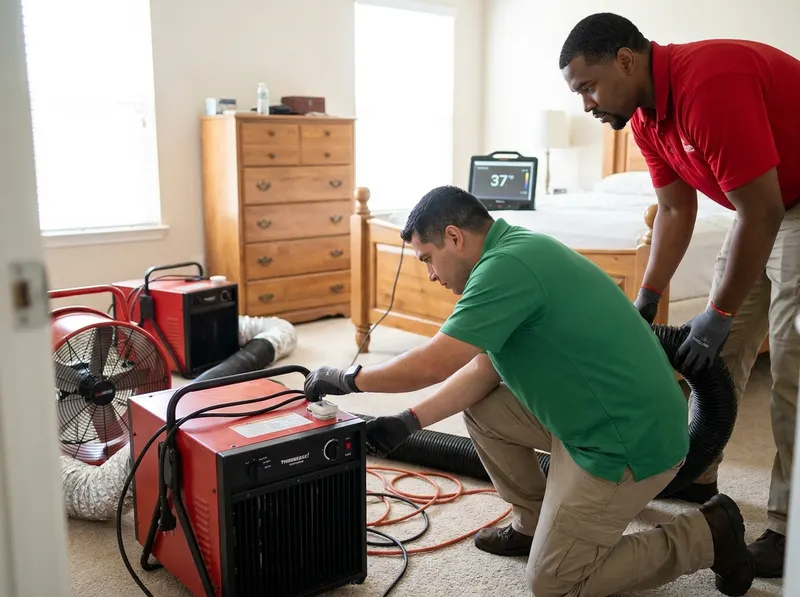
Controlled heat treatments raise interior core temperatures above lethal thermal thresholds (122°F) across mattresses, baseboards, and furnishings to destroy all developmental stages in a single pass. High-output electric heaters and industrial air movers circulate heated air throughout living spaces, penetrating internal wall cavities, deep mattress cores, headboards, and closet perimeters. Wireless thermal sensors monitored by technicians ensure all infested interior structural surfaces achieve and sustain thermal temperatures between 125°F and 135°F for a minimum of 4 consecutive hours. This clean heat exposure denatures biological proteins across all life cycles, including desiccation-resistant eggs, eliminating reliance on repeated interior synthetic insecticide sprays in sleeping environments.
Get a quote →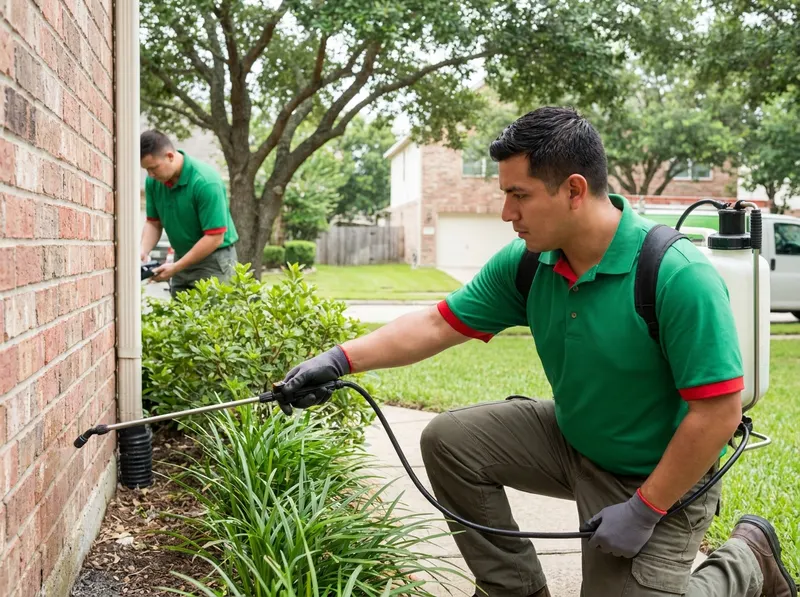
Granular protein baits and exterior barrier bands target tawny crazy ants and red imported fire ants, preventing interior forage trails and electrical equipment colonization. Invasive tawny crazy ants (Nylanderia fulva) establish dense, multi-queen supercolonies across coastal Texas lawns, frequently invading exterior air conditioning electrical contactors, irrigation control boxes, and sub-slab plumbing lines. Treatment protocols utilize broadcast applications of slow-acting fipronil granules across landscape beds, paired with liquid perimeter barrier bands applied 3 feet up exterior masonry walls and 3 feet out onto surrounding soil surfaces. Bait formulations transition from sweet sugar bases to lipid and protein matrices based on seasonal foraging demands, ensuring colony-wide ingestion and biological elimination of reproductive queens.
Get a quote →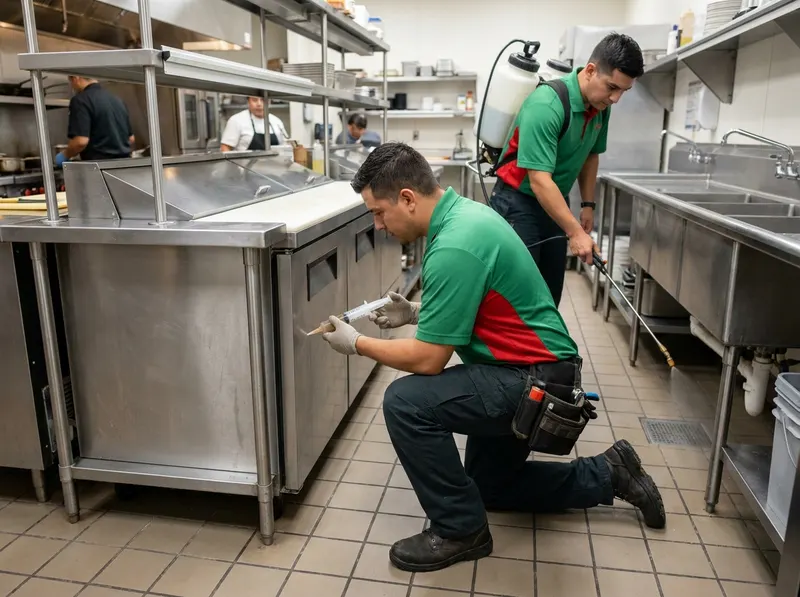
Specialized drain bio-foaming, food-safe insect traps, and sanitation audits eliminate fruit fly and roach harborages in compliance with city health standards and commercial inspection guidelines. Commercial food preparation environments harbor concentrated organic grease, food residues, and moisture inside floor drains, expansion joints, and under-counter equipment casters. Technicians apply specialized enzymatic bio-foams that actively digest organic buildup coating the internal walls of commercial plumbing lines, eliminating breeding matrices for drain flies, phorid flies, and American cockroaches. Treatment records and monitoring logs follow strict hygiene defense standards structured in alignment with food facility guidelines published by the Food and Drug Administration , ensuring commercial dining facilities maintain compliance with local municipal sanitary codes.
Get a quote →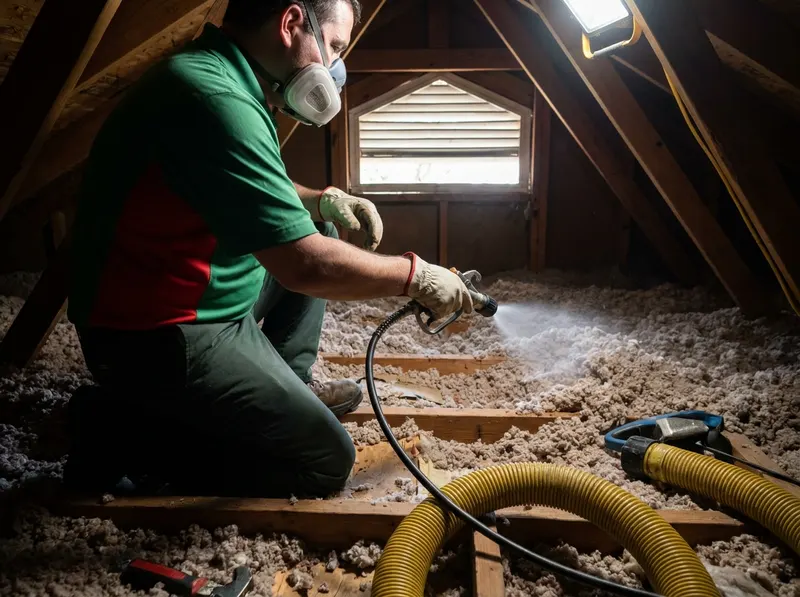
Damaged, rodent-soiled fiberglass material removal followed by HEPA vacuuming, antimicrobial enzyme misting, and thermal-grade borate cellulose blowing restores ceiling insulation integrity. When rodents or wildlife inhabit attic spaces, urine deposits and biological droppings compromise thermal performance and release volatile organic airborne particulates into indoor living areas. Technicians utilize high-volume negative air pressure extraction vacuums positioned outside the home to extract contaminated loose-fill and batt insulation through 4-inch sealed vacuum hoses. Exposed attic deck surfaces and structural ceiling framing undergo thorough HEPA sanitization and broad-spectrum antimicrobial fogging, followed by the pneumatic installation of thermal borate-treated cellulose insulation meeting modern building energy envelope standards.
Get a quote →You get a firm, itemized quote for your pest control services before any work begins, no surprises, no pressure.
Careful prep, tidy work, and a full cleanup when we are done. We treat your home and belongings like our own.
The same trusted, background-checked team from the first call to the final check.
If a structure exhibits active wood-destroying insect tubes or hollowed trim, choose non-repellent liquid soil treatments or subterranean bait installations; if dealing with indoor kitchen contamination, choose interior crack-and-crevice baiting combined with insect growth regulators. The trade-off centers on intervention depth versus treatment disruption: exterior soil trenching requires localized ground disturbance around the foundation perimeter but delivers continuous barrier defense for years, whereas interior void baiting demands zero structural disruption but requires systematic sanitation and follow-up inspections across 14-day gestation cycles. For exterior biting insects like mosquitoes, microencapsulated surface treatments fit properties with heavy foliage near Buffalo Bayou Park or Memorial Park, whereas automated misting lines suit expansive estate grounds in River Oaks or Memorial where daily programmatic suppression is required over manual monthly applications.
When evaluating rodent management, passive exterior tamper-resistant bait stations mitigate exterior population density around landscape perimeters, while full mechanical exclusion physically isolates structural attics and crawlspaces using heavy-gauge metal flashing and welded hardware cloth. Passive bait stations require recurring bait replenishment cycles every 30 to 90 days but demand minimal initial construction intervention, whereas full structural exclusion requires higher initial labor outlays across eaves, soffit intersections, and masonry weep screeds to achieve long-term physical isolation without sustained pesticide dependencies. For persistent multi-queen ant pressures such as tawny crazy ants or Argentine ants, broad-spectrum contact repellents cause colony fragmentation and rapid bud-nesting across adjacent lawn perimeters; slow-acting liquid or granular borate and hydramethylnon baits allow workers to distribute active compounds horizontally throughout complex underground supercolonies before cuticular contact poisons disrupt foraging lines.
Every project gets a firm, written price after a free on-site visit. Ranges below for orientation.
Tell us about your pest control services job and we'll send a clear, written quote, usually the same day. Or just call and talk to a real Houston pro.
(346) 210-5822
Houston properties face intense insect activity due to high year-round relative humidity, expansive clay soils, and persistent low-elevation drainage basins across Harris County. Areas bordered by Buffalo Bayou Park, White Oak Bayou, and the Texas Medical Center experience heightened subterranean termite swarms and roof rat displacement following severe seasonal rain downpours and tropical depressions originating in the Gulf of Mexico. The high-plasticity Beaumont and Lake Charles gumbo clay soils underlying Spring Branch, Meyerland, and West University Place expand dramatically during saturated wet seasons and shrink rapidly during peak summer dry spells, creating wide subterranean ground fissures that expose foundation pilings and allow subterranean termites and burrowing tawny crazy ant supercolonies to bypass exterior liquid surface defenses. Historic pier-and-beam homes throughout Montrose and The Heights feature open, ventilated crawlspaces with elevated ambient moisture levels that support persistent wood-decay fungi and provide effortless sub-floor access for drywood termites, wood-boring beetles, and American cockroaches. Meanwhile, heavily canopied residential neighborhoods including Memorial, Kingwood, and River Oaks maintain dense sweetgum, pine, and live oak canopies that physically contact shingle eaves, providing elevated transit corridors for roof rats to breach attic ridge vents and soffits without traversing ground-level terrain. Near southern coastal communities like Clear Lake, elevated water tables and constant coastal breezes demand specialized microencapsulated exterior chemical formulations engineered to adhere to brick, stucco, and treated timber substrates without deteriorating under aggressive solar UV radiation exposure.
Free estimates for Houston & the surrounding area.
For standards, safe disposal, and service guidance on pest control services in Houston, TX, useful references include U.S. EPA, ENERGY STAR, U.S. Dept. of Energy, Consumer.gov, U.S. Census Bureau, and Google Maps. General consumer and small-business resources are available from USA.gov, Better Business Bureau, FTC Consumer Advice, U.S. Small Business Administration, and Ready.gov.
 TerraVance Bug Removal